How to Become a Pilates Instructor in Australia: 5 Steps to Certification
In short
- To become a Pilates instructor in Australia, complete a recognised Pilates instructor certification, then get first aid and CPR, register with AUSactive and take out insurance.
- You don’t need a fitness or health background. Most people qualify in 3 to 9 months, studying in person, online or a mix of both.
- Once qualified, you can teach in studios, gyms, clinics and online, or go on to open your own studio.

If you’ve ever thought about turning your love of movement into a career, teaching Pilates is one of the most flexible ways to do it. Pilates is now a staple in boutique studios, gyms and physiotherapy clinics across Australia, and qualified instructors are needed to teach it.
This guide walks you through each step, from choosing a course to teaching your first class. Not sure what the job involves day to day? Start with what a Pilates instructor does.
Choose your path
Matwork, reformer or both
Choose a recognised course
Recognised by AUSactive
Complete your training
Training, practice and exam
Get registered and insured
First aid, CPR and insurance
Find work
Build experience and get hired
Step 1
Choose your path
Before you compare courses, decide what you want to teach and how you want to learn.
Matwork, reformer or both?
- Matwork Pilates uses body weight and small props such as resistance bands, balls and rings. It is taught in gyms, studios, clinics and community spaces, and you can teach it almost anywhere.
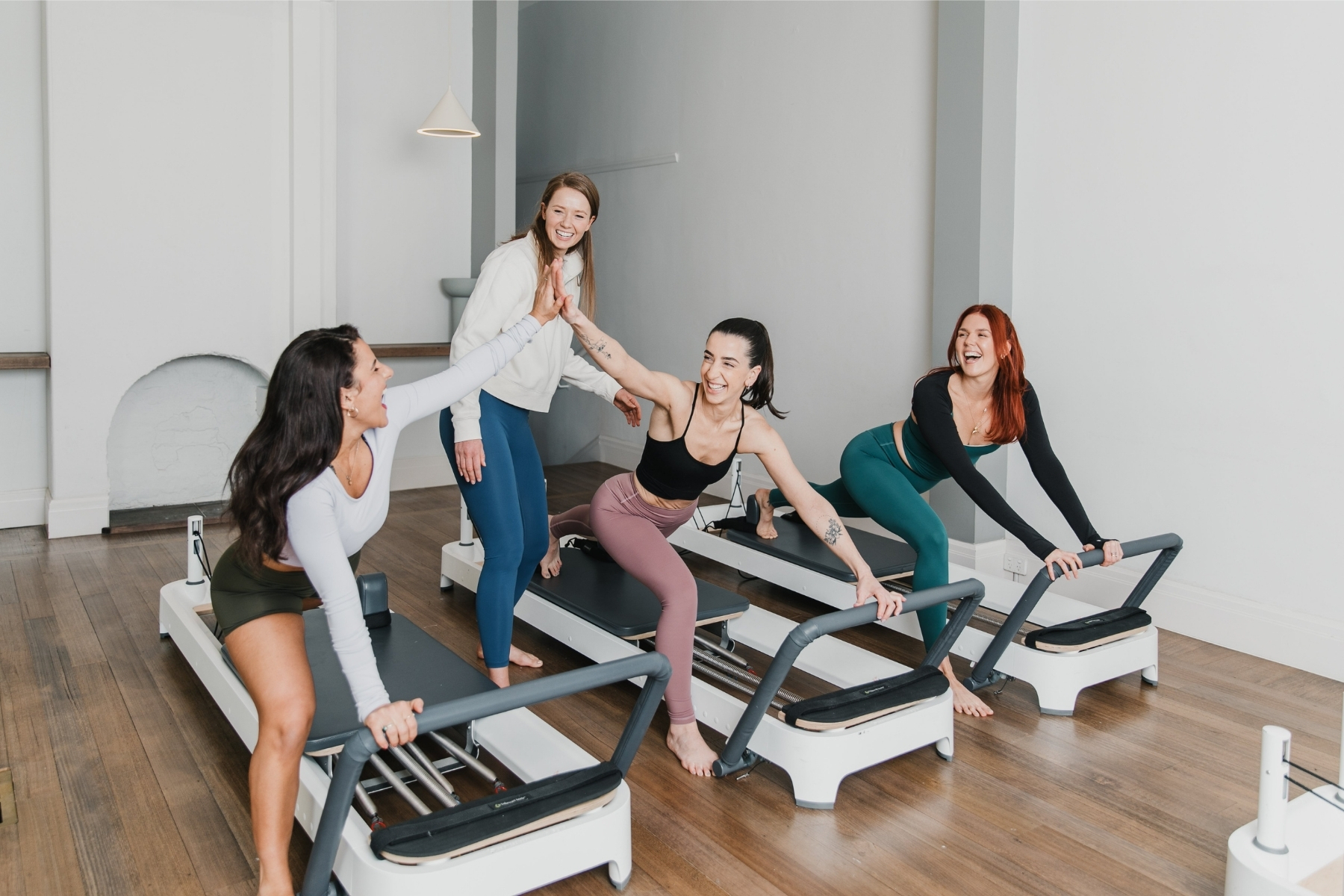
- Reformer Pilates uses a machine with springs, pulleys and a sliding carriage. It allows more varied resistance and support, and is offered in many boutique studios. See how to become a reformer Pilates instructor.
- Both gives you the widest range of work. Many instructors start with one and add the other later.
Compare them in more detail in Mat vs Reformer vs Clinical Pilates Certification.
In person, online or hybrid?
The best format is the one you can finish while working, studying or parenting.
Intensive blocks
For people who want to qualify quickly and can take time off.
Weekend modules
For people balancing work or family.
Hybrid
Online theory combined with in-person practical training.
100% online, self-paced
For people outside capital cities or with irregular schedules.
Read more about studying Pilates online in Australia and our hybrid format.
Do I need experience?
No. You don’t need a fitness or health qualification to start. Our students come from all kinds of backgrounds:
- Allied health, such as physiotherapists and occupational therapists
- Fitness, such as personal trainers and yoga teachers
- Corporate and office roles, looking for a career change
- Parents wanting flexible work
- Retail and hospitality workers moving into wellness
If you love Pilates and want to help people move better, you can start. See how to become a Pilates instructor with no healthcare background.
Step 2
Choose a recognised course
Your training provider shapes how well you teach and how easily you find work. Look for:
Industry recognition
Employers, insurers and registration bodies such as AUSactive should recognise the course.
Enough practical training
Supervised teaching practice, observation hours and live feedback, not just theory.
Graduate support
Studio partnerships, a job board or career support once you qualify.
The right format and location
We train in Melbourne, Sydney, Brisbane, Adelaide and Perth, as well as online. Find your nearest Pilates course location.
Graduate reviews
What past students say about teaching quality and support.
You may also see Certificate IV and Diploma qualifications advertised. We explain how they compare in Pilates instructor qualifications in Australia. For a full checklist, read what to look for when choosing a Pilates certification.
Step 3
Complete your training
Most people complete their certification in 3 to 9 months. How long you take depends on the format you choose and how much time you can give it each week.
What’s included in the APPI Pilates Instructor Certification
- 14 days of face-to-face training, delivered intensively or across weekends
- Observation hours, watching experienced instructors teach
- Self-practice, building your own Pilates practice
- Supervised practice teaching, so you get feedback before you teach on your own
- A final written and practical exam
Across the course you’ll learn anatomy, movement principles, exercise safety, cueing, class planning and how to adapt exercises for different clients.
Read about the Unite Health exam process and how much it costs to become a Pilates instructor.
Step 4
Get first aid, registration and insurance
Your certificate qualifies you to teach. Before you start, studios will also expect current first aid and CPR, industry registration, and your own insurance.
First aid and CPR
You’ll need a nationally accredited CPR certificate (HLTAID009, renewed every 12 months) and First Aid certificate (HLTAID011, renewed every 3 years). If they lapse, your registration and insurance may no longer be valid.
Register with AUSactive
AUSactive is the peak body for Australia’s exercise and active health industry. The APPI Pilates Instructor Certification is an AUSactive-approved course, so graduates can register as a Fitness Pilates Instructor without any other fitness qualification.
Take out insurance
Most instructors hold a combined policy covering professional indemnity, public liability and products liability. Buy cover from a specialist insurer, or bundle it with your registration through AUSactive’s Professional Plus membership. Teaching from home or opening a studio often needs separate cover.
Step 5
Gain experience and find work
Your first few months of teaching build the confidence that turns a qualification into a career.
Build experience
- Shadow experienced instructors. Watch how they cue, manage a full class and adapt exercises for different clients.
- Teach friends and family. Low-pressure sessions are the best place to practise your cueing and timing.
- Start with small classes or 1:1 sessions. Build up to larger groups as your confidence grows.
- Keep learning. Upskill courses in reformer, equipment or ante/post-natal Pilates widen the clients you can work with.
Find your first job
Pilates instructors work in boutique studios, gyms, physiotherapy clinics, corporate wellness programs and online. Many teach across several venues, and some go on to open their own studio.
- Browse roles on the Unite Health job board.
- Graduates also benefit from our partnership with KX Pilates.
- Read how to improve your employment opportunities as a Pilates instructor and the top career opportunities for Pilates instructors.
Wondering what you could earn? See how much a Pilates instructor earns in Australia.
The benefits
Why become a Pilates instructor?
Flexibility
Set your own schedule and teach part-time, full-time or alongside another job.
Global recognition
An APPI certification is recognised internationally, so your skills travel with you.
Meaningful work
Help clients move better, recover from injury and feel stronger.
Room to grow
Specialise, mentor other instructors or open your own studio.
Read more in 3 ways a career in Pilates helps you feel fulfilled.
FAQs
Frequently asked questions
Do you need a licence to be a Pilates instructor in Australia?
Pilates instructors are expected to be certified before they teach. Studios and insurers will usually ask to see a recognised certification, current first aid and CPR, and your own insurance before you take a class.
How much does it cost to become a Pilates instructor?
It depends on the course, format and whether you train in matwork, reformer or both. See our breakdown of the cost of becoming a Pilates instructor.
How much do Pilates instructors earn?
Pay depends on where you teach, whether you’re employed or contracting, and how many classes you take on. See how much a Pilates instructor earns in Australia.
Are Pilates instructors in demand?
Pilates continues to grow across Australia, in studios, gyms and clinics. See the latest Pilates trends by state.
Start your Pilates career
Find the course and format that suit you, or talk it through with one of our Pilates educators first.
Enrol in a Pilates CourseBook a Chat